How Much Freezer Space Do I Need for Half a Cow?
The short answer: plan for 1 cubic foot of freezer space per 25-30 pounds of meat.
8 min read

A directory of farms, butchers and co-ops that sell beef by the quarter, half or whole.
Quick Answer
Half a cow needs 8-10 cubic feet of freezer space (200-250 lbs of meat). A quarter cow needs 4-5 cubic feet and may fit in a large kitchen freezer. A 10 cu ft chest freezer ($200-400) is the most common choice for half-cow buyers.
Rule of thumb: Plan for 1 cubic foot of freezer space per 25-30 lbs of packaged meat. Buy 20-25% more space than the math suggests to leave room for organization.
Quick Reference
| Share Size | Meat (approx) | Freezer Space | Freezer Size |
|---|---|---|---|
| 1/8 Cow | 50-60 lbs | 2 cu ft | Standard fridge freezer |
| 1/4 Cow | 100-130 lbs | 4 cu ft | 5 cu ft chest freezer |
| 1/2 Cow | 200-250 lbs | 8 cu ft | 10 cu ft chest freezer |
| Whole Cow | 400-500 lbs | 16 cu ft | 20 cu ft chest freezer |
Understanding the Numbers
When you buy a share of beef, you'll hear terms like “hanging weight” and “take-home weight.” Here's what they mean:
Live Weight
The animal's weight before processing. A typical beef steer weighs 1,000-1,400 lbs live.
Hanging Weight
Weight after initial processing (head, hide, organs removed). Usually about 60% of live weight. This is typically what you're charged for.
Take-Home Weight
The actual meat you take home after butchering. Usually 60-65% of hanging weight. A half cow at 350 lbs hanging weight yields roughly 200-225 lbs of packaged meat.
Chest Freezer vs Upright: The Physics
For bulk meat storage, chest freezers are the clear winner. The physics explains why:
| Feature | Chest Freezer | Upright Freezer |
|---|---|---|
| Cold air behavior | Stays in basin when opened | Pours out when door opens |
| Power outage | 2-3 days frozen | 1-2 days frozen |
| Defrost type | Manual (stable temps) | Auto (causes freezer burn) |
| Energy use | ~215 kWh/year | ~395-445 kWh/year |
| Annual cost | $37-45/year | $67-75/year |
| Usable space | ~100% of interior | ~85% (shelves/vents) |
| Organization | Harder (dig for items) | Easier (shelf access) |
Cold air is denser than warm air. In a chest freezer, it stays pooled in the basin even when you open the lid. In an upright, cold air literally pours out when you open the door, forcing the compressor to work harder. Over 10 years, a chest freezer saves $300-400 in electricity versus an upright.
Garage-Ready Freezers
Planning to put your freezer in a garage or outbuilding? You need a garage-ready model.
Why standard freezers fail in garages
Standard freezers are designed for 60°F-80°F environments. When garage temperatures drop below freezing, the thermostat may read “cold enough” and stop the compressor. Meanwhile, your food partially thaws. In summer, extreme heat forces the compressor to run constantly, burning it out.
What makes a freezer “garage-ready”
- •Heater-equipped thermostat: A small heating element tricks the thermostat in cold weather
- •Extended temperature range: Certified to operate from 0°F to 110°F
- •Heavy-duty insulation: Protects against summer heat spikes
Look for models from GE, Frigidaire, Gladiator, or Maytag specifically labeled “garage-ready.”
What Size Freezer for Half a Cow?
The 25% Rule
Buy 20-25% more space than the math suggests. A 10 cubic foot freezer is ideal for half a cow—it gives you room to organize with bins and leaves space for ice cream. Expect to pay $200-400 for a quality Energy Star chest freezer.
Buying a Whole Cow?
Consider two 14 cubic foot freezers instead of one 21+ cubic foot unit. If one compressor fails, you don't lose everything. You can also designate one as “deep storage” (rarely opened) and one as “daily use”—keeping your long-term meat at more stable temperatures.
Recommended Chest Freezers
These are the freezers we'd recommend based on the share sizes most people buy. All are chest-style for the reasons above.
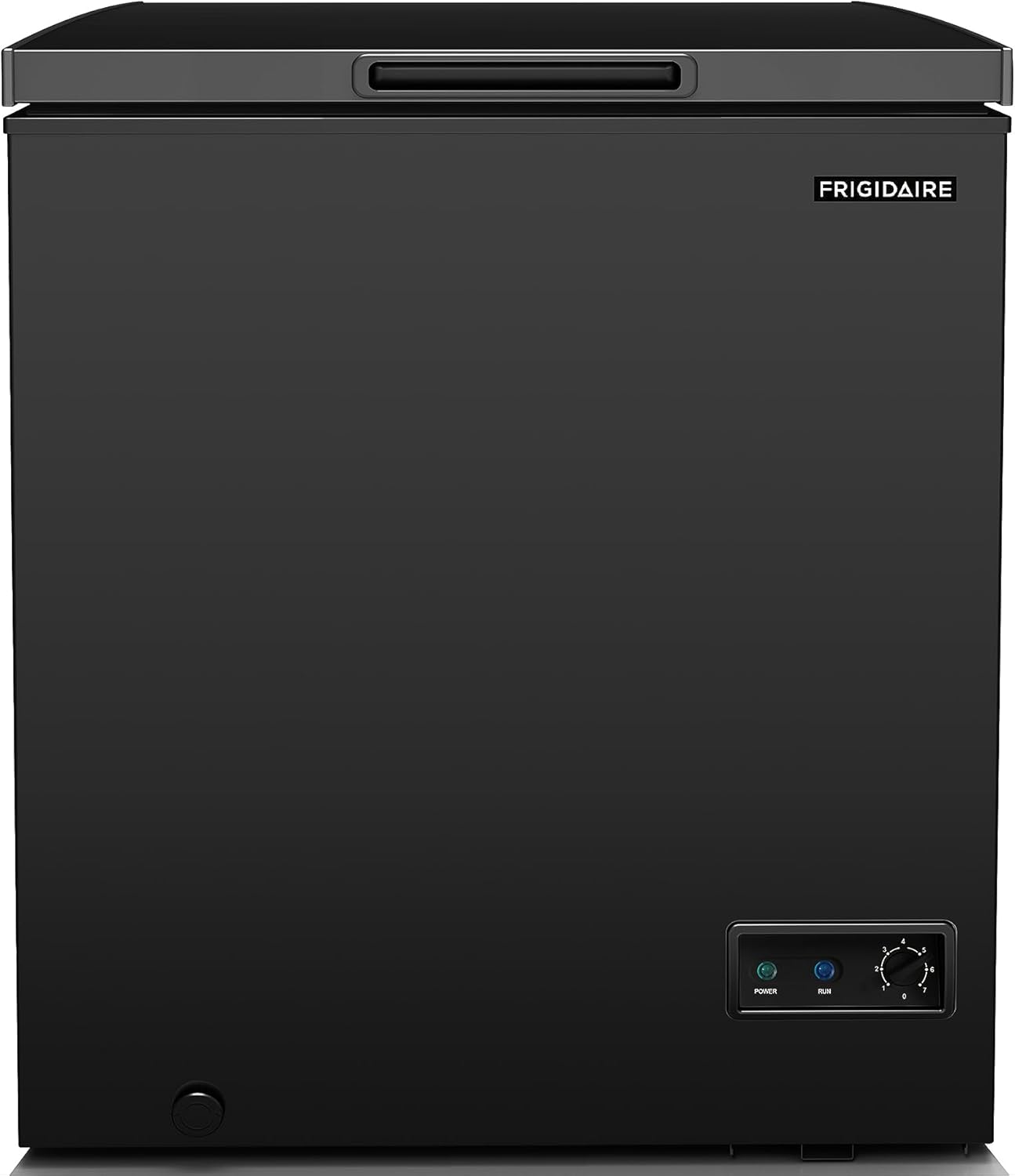
Frigidaire 5.0 Cu. Ft. Chest Freezer
Garage-ready, removable basket, front drain

EUHOMY 7.0 Cu. Ft. Deep Freezer
Quiet operation, 7-level thermostat, energy efficient

TABU 7.0 Cu. Ft. Chest Freezer
Budget pick, removable basket, adjustable thermostat
Frigidaire 10 Cu. Ft. Chest Freezer
Trusted brand, good for half cow (tight fit)
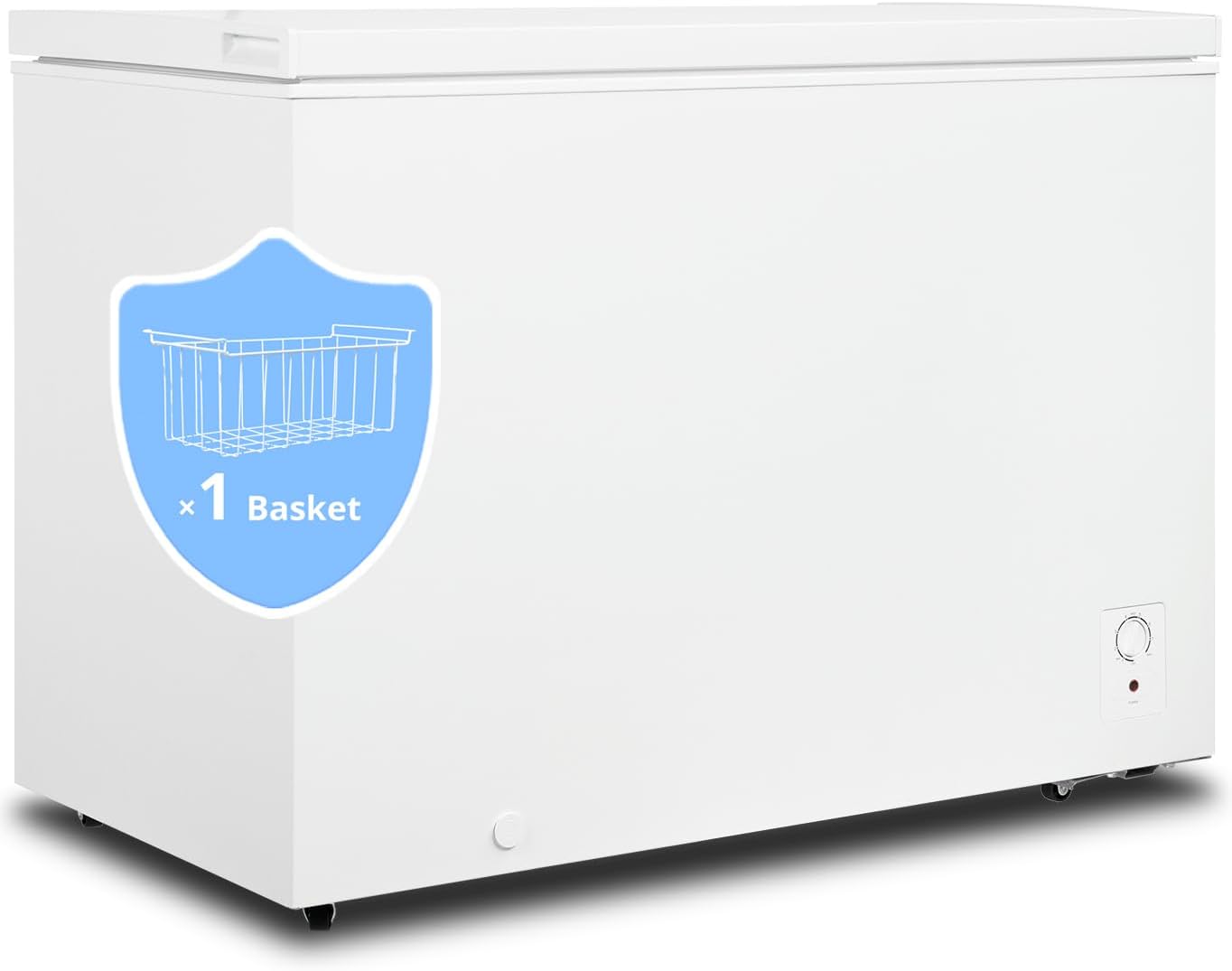
SMETA 14.0 Cu. Ft. Chest Freezer
Half cow with room to spare, 4 wheels, removable basket
As an Amazon Associate we earn from qualifying purchases.
Organizing a Chest Freezer
The biggest complaint about chest freezers is organization. Without a system, you'll end up digging through a frozen archaeological dig site. Here's how to avoid that:
Zone Your Freezer
- Bottom: Heavy, bulky items you access rarely (soup bones, brisket, large roasts)
- Middle: Use plastic bins or milk crates standing on end—one for steaks, one for roasts, one for ground beef
- Top/Baskets: High-turnover items (ground beef, bacon, weeknight steaks)
The Magnetic Manifest
Keep a whiteboard or magnetic notepad on the freezer lid. List what's inside and cross items off as you use them. This prevents the “what do we have?” lid-open browse that lets cold air escape.
FIFO: First In, First Out
When you restock, new meat goes to the bottom. Older meat stays on top. This ensures you use inventory in order and nothing gets “lost” for two years.
Pro Tips
- 1.Buy your freezer 2-3 weeks before pickup to ensure it's running at optimal temperature.
- 2.Keep a inventory list on the freezer lid. Cross off items as you use them to track what's left.
- 3.Consider splitting with neighbors or family if a whole half is too much. Many farms allow this.
- 4.Factor in electricity costs: a chest freezer runs about $30-50/year, less than $5/month.
Freezer sorted?
Get weekly tips on buying, storing, and cooking bulk beef.
Frequently Asked Questions
Can I put a freezer in my garage?
Yes, but you need a "garage-ready" freezer if your garage experiences temperature extremes. Standard freezers are designed for 60°F-80°F environments. When ambient temperature drops below freezing, the thermostat may think it's cold enough and stop running—causing food to thaw. Garage-ready models (from brands like GE, Frigidaire, and Gladiator) have heater-equipped thermostats and are certified to operate from 0°F to 110°F.
How long should I run a new freezer before loading it with meat?
Run your freezer for 24-48 hours before adding meat. This allows it to reach optimal temperature (0°F or below) and stabilizes the compressor. If you load 200+ pounds of room-temperature meat into a warm freezer, it may struggle to freeze everything quickly, leading to larger ice crystals and potential quality loss.
What temperature should my freezer be set to?
The FDA mandates 0°F (-18°C) for food safety, but colder is better for quality preservation. Most chest freezers run at -10°F to 0°F. At these temperatures, bacterial growth stops completely. The real enemy is temperature fluctuation—every time the freezer cycles or the door opens, ice crystals grow larger, damaging meat fibers.
How often should I defrost my freezer?
Manual defrost chest freezers need defrosting once or twice a year, or when ice buildup exceeds 1/4 inch. This is actually an advantage for meat storage—manual defrost freezers maintain more stable temperatures than auto-defrost models, which cycle through warming periods that accelerate freezer burn. Schedule defrosting when your meat inventory is low.
What happens to my meat if the power goes out?
A full chest freezer keeps food frozen for 2-3 days without power if you keep the lid closed. A half-full freezer lasts about 24 hours. Chest freezers outperform uprights here because cold air settles and stays put when you open a top-loading lid. Keep a thermometer inside and don't open it during an outage. Meat that still contains ice crystals or is at 40°F or below can be safely refrozen.
What Cuts Do You Get from Half a Cow?
Related Guides
Related Calculators
Sources & Methodology
- USDA - Freezing and Food Safety Guidelines
- ENERGY STAR - Chest Freezer Specifications
- Penn State Extension - Understanding Beef Carcass Yields
- Half a Cow Club supplier directory - 1,200+ verified listings
Find bulk beef near you
We'll connect you with a nearby farm, butcher, or co-op selling quarter, half, or whole beef. Free, no accounts, and only one farm gets your contact details.
Ready to find a supplier?
Browse local farms selling half cows in your state.
Browse Suppliers